MA Foreclosures & Title 5: Something to Avoid?
It’s often ‘buyer beware’ with Massachusetts foreclosures. This is especially the case for unwary buyers of MA foreclosed homes that lack public sewer service. The Title 5 regulations can make buying foreclosed homes with private septic systems a tricky proposition.
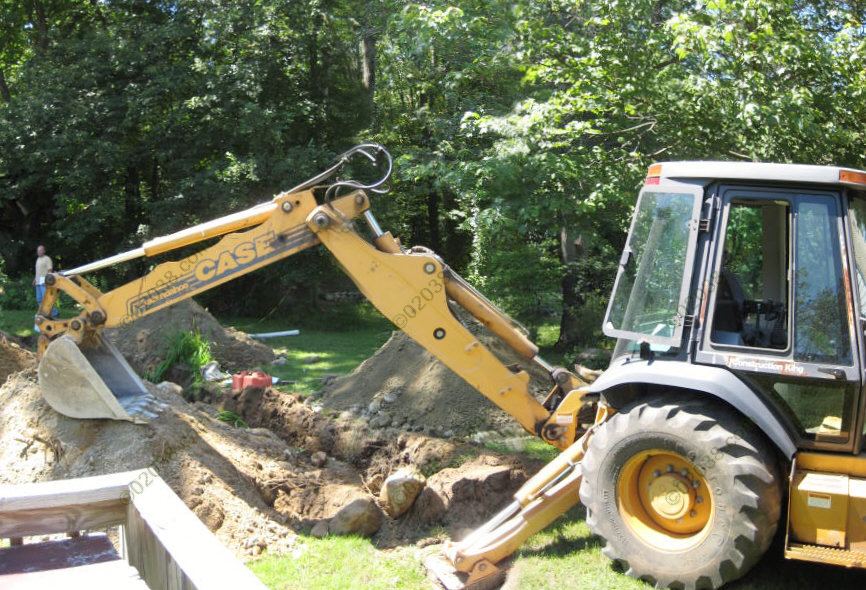
As you probably know, the Title 5 regulations in Massachusetts mandate that all homes not on town sewer have their on-site sewage disposal systems (typically a septic system) inspected prior to the sale of the property.
Most home sellers routinely pay for the Title 5 inspection as part of the process of selling their home
You’d think that this would mean that when you buy a foreclosed MA home from a lender (often called an REO property) the lender would offer it to you with a passing Title 5 inspection report.
This is unfortunately not the case with Massachusetts foreclosures; there is an exception in the Title 5 regulations which specifically allows foreclosing lenders to avoid the Title 5 inspection obligation.
This exception in practice puts the onus of ensuring compliance with MA’s Title 5 regulations squarely on the buyer of the REO property.
Here’s how this works:
The regulations colloquially referred to as “Title 5” comprise 96 legal-sized pages of text codified under 310 CMR 15.000.
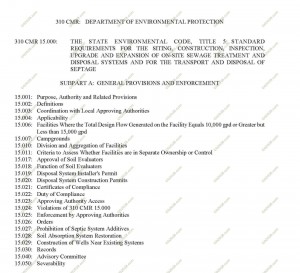
You can download the Title 5 regulations here.
310 CMR 15.301 sets forth the inspection requirements of Title 5.
Title 5 requires that all on-site sewerage disposal systems be inspected prior to the sale of the property they serve. The inspection must take no earlier than 2 years prior to the sale (3 years if the waste disposal system was pumped annually after the inspection).
If weather conditions preclude inspection prior to the sale, the inspection can he performed no later than six months after the closing.
310 CMR 15.301(3)(b) makes the important exception for foreclosure sales.
Essentially, this provision allows a foreclosing institution to avoid performing the Title 5 inspection for up to six months after the Massachusetts foreclosure sale, so long as within that time period it contractually allocates responsibility for the inspection to an “unaffiliated third party” (i.e. the buyer at the subsequent REO re-sale).
Thus, lenders selling a REO Massachusetts foreclosure property can refuse to pay for or perform the Title 5 inspection, seeking instead to make the buyer deal with the Title 5 hassles.
If you as the buyer need financing to fund your acquisition of an REO property, your mortgage lender will require a passing Title 5 inspection before the closing. So you’ll have to go out of pocket to pay for the Title 5 inspection of a home you don’t yet own. This can cost you anywhere from $350 to $700 or more.
If the inspection can’t be done prior to the closing, your mortgage lender will expect you to put many thousands of dollars into an escrow fund to cover the cost of the inspection and any system repairs that might be indicated by the results of a post-closing Title 5 inspection.
Either way, the Title 5 inspection gets done at the expense of the buyer of the MA foreclosure property.
A potential trap lies in wait for cash buyers of Massachusetts foreclosures: a cash buyer may be tempted to skip the Title 5 inspection, because there is no purchase money mortgage lender demanding that the inspection be done or funds escrowed.
So cash buyers sometimes buy REO homes with the septic system uninspected in the (mistaken) belief that no Title 5 inspection need be done at all.
These cash buyers may not realize that the Title 5 inspection is mandatory and must be performed within 6 months of their purchase of the REO home.
And if the on-site system fails the Title 5 inspection, all system repairs must be performed at their, the new owner’s, expense. That can be a costly proposition!
In reality there are no “septic police” out there stringently monitoring compliance with Title 5.
So a cash buyer of an REO property may encounter no ramifications for his failure to get the Title 5 inspection performed.
But local boards of health are charged with enforcing Title 5 and your cash purchase sans Title 5 inspection may catch a health agent’s eye – with potentially very expensive consequences for you!
So cash buyer beware . . . or buy Massachusetts foreclosures only on public sewer!
Copyright ©2009 02038.com